Heartening to read in The Times of India about efforts to revive Patna Kalam, especially the interview highlighting active revival initiatives. Art forms survive when someone chooses to practice, teach, and carry them forward. May this be the beginning of a strong revival.
There are art forms that glorify kings and empires. And then there are art forms that quietly document life itself.

Patna Kalam, also known as the Patna School of Painting, belongs to the latter.
It is one of India’s most distinctive yet lesser-known painting traditions a style that chose markets over palaces, craftsmen over courtiers, and everyday life over royal grandeur.
Today, as conversations around revival begin to re-emerge, it is important to revisit its history, practitioners, and cultural significance.
Origins: From Mughal Courts to Patna’s Streets
Patna Kalam emerged in the 18th century, during the decline of the Mughal Empire. As royal patronage weakened in Delhi and other courts, many miniature painters migrated eastward in search of new opportunities. Some eventually settled in Patna (then known as Azimabad), which was a thriving commercial and cultural center.
While deeply influenced by Mughal miniature techniques fine brushwork, attention to detail, and delicate line rendering Patna Kalam developed its own identity.
Instead of focusing on emperors and court scenes, artists turned their gaze toward:
Local traders
Artisans at work
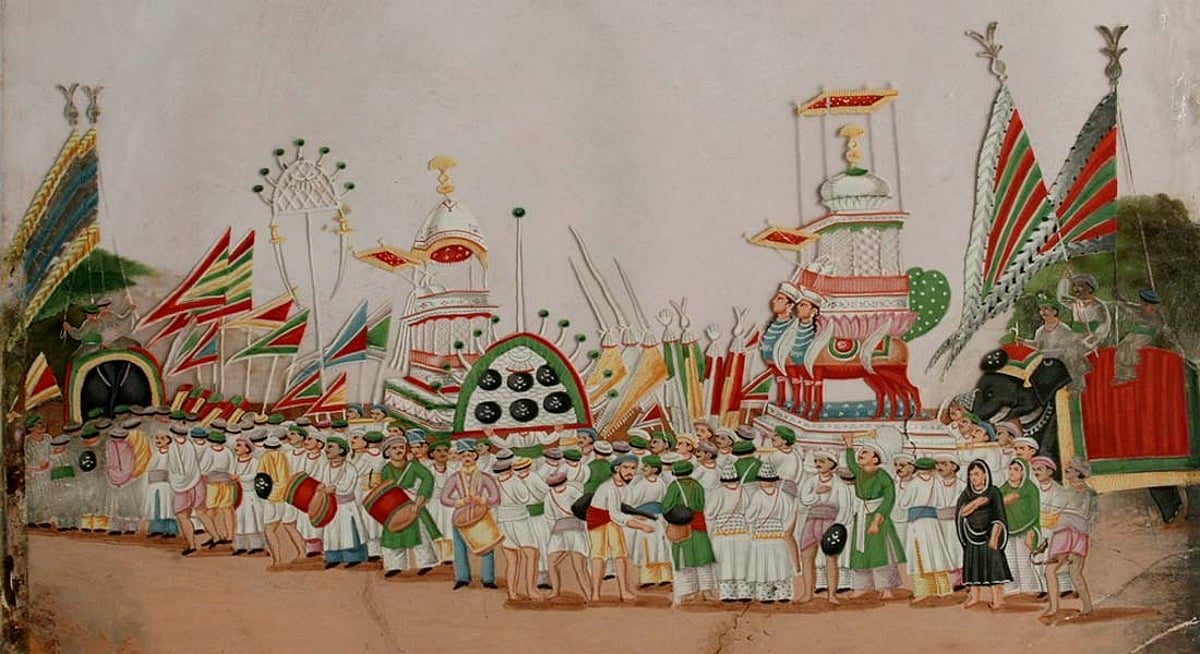
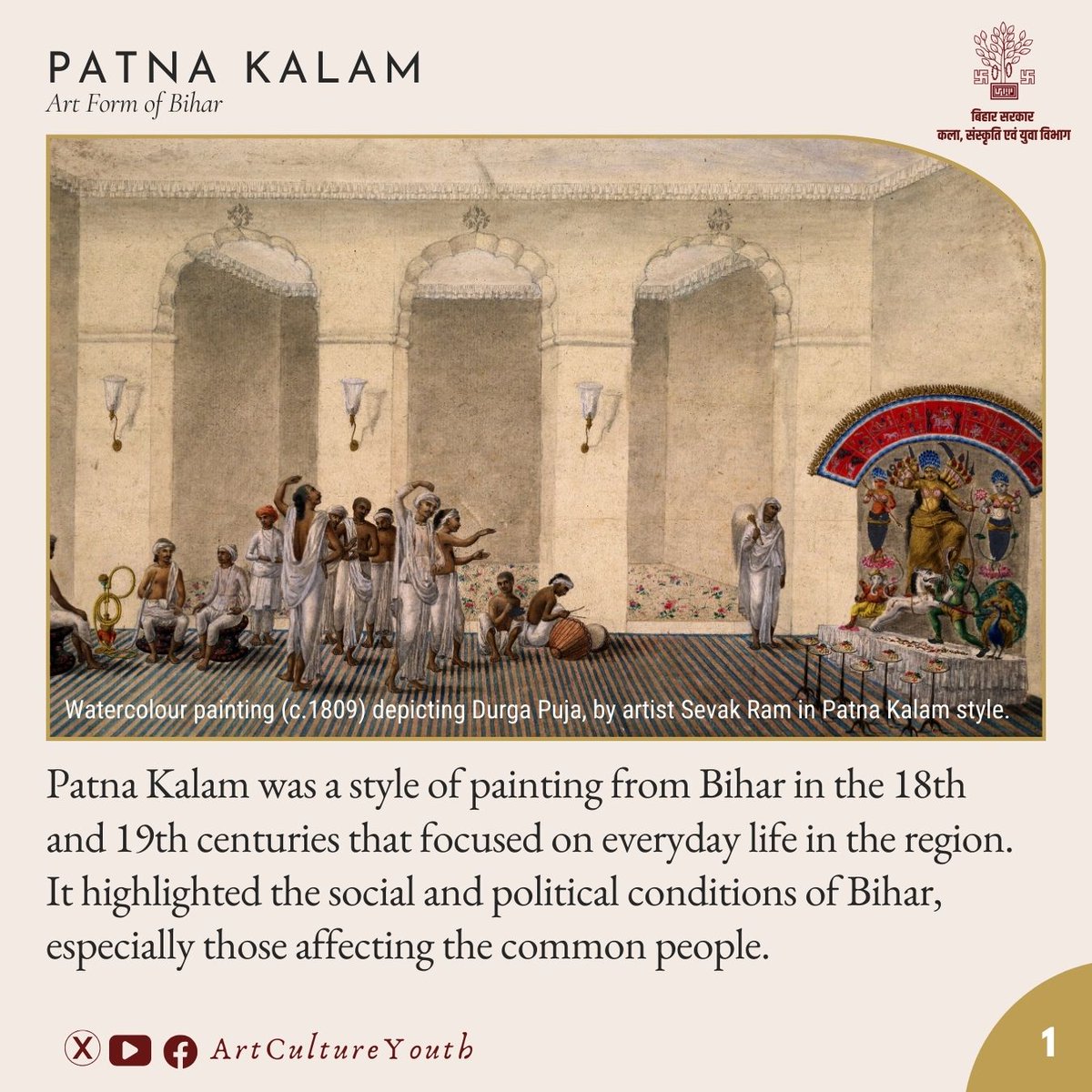
Festivals and rituals
Soldiers, musicians, dancers
Bazaar life and domestic scenes
In many ways, Patna Kalam became a visual archive of 18th–19th century urban India.
A Distinctive Style
Patna Kalam stood apart for several reasons:
1. Everyday Realism
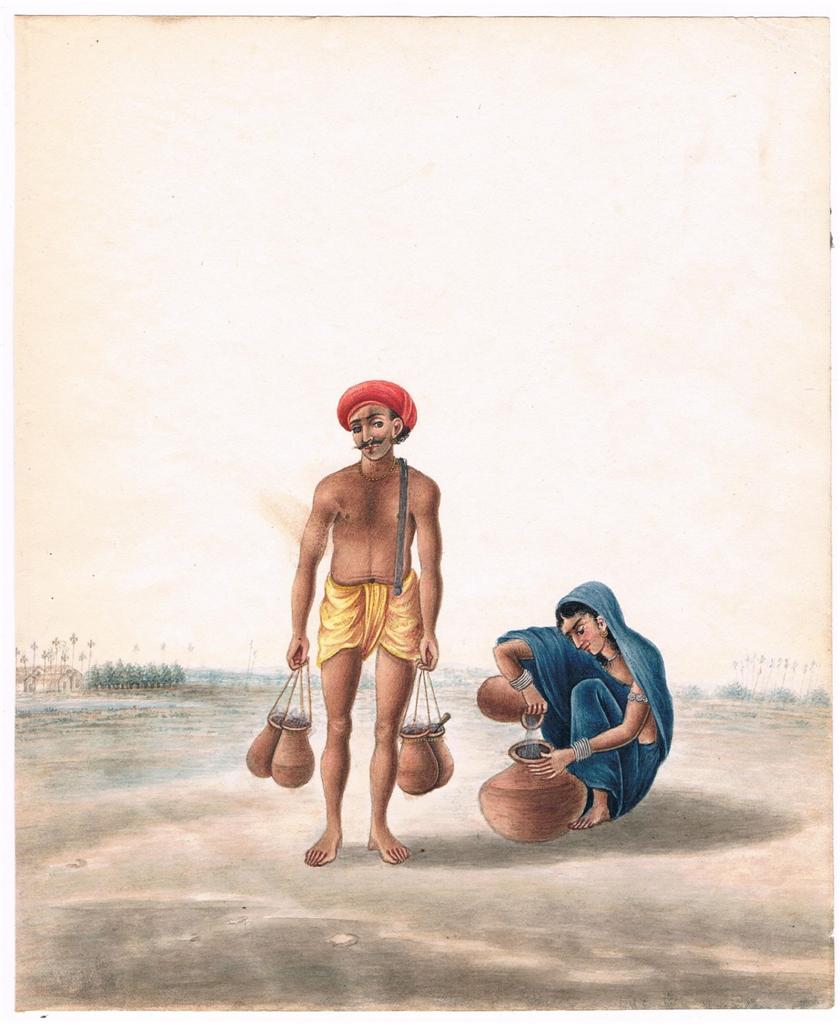
Unlike the stylized romanticism of many court schools, Patna artists captured realism. Their subjects were ordinary people engaged in daily activities — spinning yarn, selling vegetables, preparing food, playing instruments.
2. Transparent Watercolours
Artists used subtle washes of transparent watercolour, often on paper or mica. The palette was restrained earthy tones, soft reds, muted blues, and delicate shading.
3. Minimal Backgrounds
Unlike Mughal miniatures filled with elaborate settings, Patna Kalam often featured sparse or no backgrounds, allowing the human subject to dominate the composition.
4. Fine Draftsmanship
The linework was meticulous. Even the folds of clothing and textures of tools were rendered with exceptional precision.

Prominent Practitioners
While many names have faded from public memory, several artists are historically associated with the Patna School.
Sevaks Ram (c. 1770–1830)
Often regarded as one of the earliest and most important exponents of Patna Kalam, Sevaks Ram helped shape the school’s distinct identity. His works demonstrate strong Mughal training blended with observational realism.
Hulas Lal
Known for detailed depictions of everyday occupations, Hulas Lal contributed to the documentation of social life in Patna and surrounding regions.
Ishwari Prasad Verma (1887–1949)
One of the later practitioners of the tradition, Ishwari Prasad Verma is often considered among the last significant artists of the Patna School. His work bridged tradition and modernity, but by his time, patronage had significantly declined.
Many Patna Kalam artists also produced works for British patrons during the colonial period, contributing to what later came to be described as the “Company School” style — though Patna Kalam retained its own regional sensibility.
The Colonial Shift and Gradual Decline
During British rule, some Patna artists adapted their skills to serve colonial officials who desired ethnographic documentation — paintings of local castes, trades, and customs.
While this provided temporary patronage, it also altered the direction of the art form. Over time:
Photography replaced painted documentation.
Royal and elite patronage diminished.
Modern art movements shifted aesthetic priorities.
By the early 20th century, Patna Kalam had largely faded as a living tradition.
Why Patna Kalam Matters Today
Patna Kalam is not merely a regional style — it is a social document.
It tells us:
What people wore
What they traded
How they worked
How festivals were celebrated
What everyday India looked like two centuries ago
In an era where visual storytelling is dominated by digital media, this school reminds us that documentation through art has deep roots in Indian history.
For artists from Bihar and beyond, Patna Kalam represents:
A bridge between Mughal precision and local narrative
An early form of social realism in Indian art
A reminder that heritage includes the lives of ordinary people
Revival: A Necessary Conversation
Recent discussions and interviews around reviving Patna Kalam are both timely and urgent.
Revival cannot be symbolic. It requires:
Archival research
Institutional support
Workshops and training
Inclusion in art curricula
Exhibitions and collector awareness
Most importantly, it requires artists willing to study and practice the technique deeply — not as imitation, but as continuation.
A Personal Reflection
As someone deeply engaged with traditional art forms, I feel that every regional style carries a responsibility. Whether it is Madhubani, Kalamkari, or Patna Kalam — these are not static museum objects.
They are living languages.
If we stop speaking them, they fade.
If we practice them, teach them, and reinterpret them thoughtfully, they evolve.
Patna Kalam once recorded the heartbeat of a city.
Perhaps it is time to let it record our present — again.
#patnakalam #indianart #heritageconservation #biharart #artrevival


No comments:
Post a Comment